If you have ridden mostly on tarmac, the thought of gravel, sand or a stream crossing on a Himalayan pass can feel intimidating. It shouldn't stop you. Almost every motorcycle tour in India includes some unpaved or broken surface, and with a little preparation, the right technique and a guided group behind you, these sections quickly become some of the most memorable parts of the trip.
Read This: Unwritten Rules of Riding in Himalayas
This guide explains what to expect, how to ride it, and how our tour captains and support team make it manageable.
What Is Different About Riding Dirt Compared with Tarmac?
Three things change when the surface does:
- Grip is lower and less predictable. The surface can switch from hard-packed to loose gravel to sand within a few hundred metres.
- Some movement from the bike is normal. On tarmac, a sliding tyre means something has gone wrong. On loose ground, a little wiggle at the front or rear is expected, and the bike is designed to cope with it.
- Your body position matters more. You ride more actively, often standing on the pegs, and you stay relaxed rather than rigid.
The biggest mental hurdle is not tensing up when the bike moves. Keep your arms and elbows loose, stay centred over the bike, look where you want to go and keep a steady throttle. Riders who do this find that most of the fear disappears after the first few kilometres.
What Unpaved Surfaces Will You Meet on an India Motorcycle Tour?
India's roads are varied, and the dirt sections differ by region.
|
Surface
|
Where you may meet it
|
How to ride it
|
|
Loose gravel and broken tarmac
|
High Himalayan passes, landslide-hit stretches, roadworks
|
Slow down before the section, stay in a straight line, brake before turns rather than in them
|
|
Water crossings and meltwater streams
|
Ladakh and Spiti, especially in the afternoon when snowmelt rises
|
Follow your tour captain's line, stay standing, keep a steady throttle, never stop mid-stream
|
|
Mud and slush
|
Near high passes and during wet spells
|
Pick one line and commit to it, scrub speed before the mud, not in it
|
|
Sand patches
|
Desert approaches, village tracks and dry riverbeds in Rajasthan and parts of the Himalayas
|
Keep momentum, stay light on the bars, look ahead and don't brake hard
|
|
Hard-packed dirt tracks
|
Village roads and detours in both regions
|
The easiest dirt to learn on; stand up and let the bike move beneath you
|
On a guided tour, your tour captain will brief you before the tricky stretches, set a sensible pace, and show you the best line. You don't need to work it out alone. Check Rajasthan Motorbike Tour Departure Dates 2026-27 to join the adventure.
What Is the Right Body Position and Technique?
- Stand on the pegs on rough ground. Standing lets the bike move freely under you and absorbs bumps far better than sitting. Sit down for smooth sections and slow, tight manoeuvres.
- Weight the outside peg in turns. This keeps both tyres loaded and the bike stable.
- Keep elbows up and loose. Locked arms make the front wheel stiff and twitchy.
- Look where you want to go. The bike follows your eyes. Don't stare at the rock or pothole you want to avoid.
- Use the rear brake more and the front brake gently. On loose ground, a hard grab of the front brake can make the front wheel wash out. Squeeze progressively, and slow down before corners.
- If the rear steps out, stay on the throttle. Closing it suddenly makes things worse. A small, steady roll-on usually settles the bike.
- Keep a steady, moderate speed. Dirt sections reward smoothness, not speed.
What Gear Should You Wear?
Good protective gear matters more on loose surfaces, where a slow fall is more likely than on tarmac. Plan to bring or arrange:
- A certified full-face or off-road style helmet in good condition (look for ECE 22.06 or an Indian BIS-certified helmet)
- Goggles or a visor with a good dust seal, plus sunglasses for high-altitude glare
- A riding jacket and trousers with removable armour at the shoulders, elbows, back and knees
- Riding boots with a stiff sole and ankle support
- Gloves with good grip
- Layers for temperature swings, since Himalayan mornings can be freezing and afternoons warm
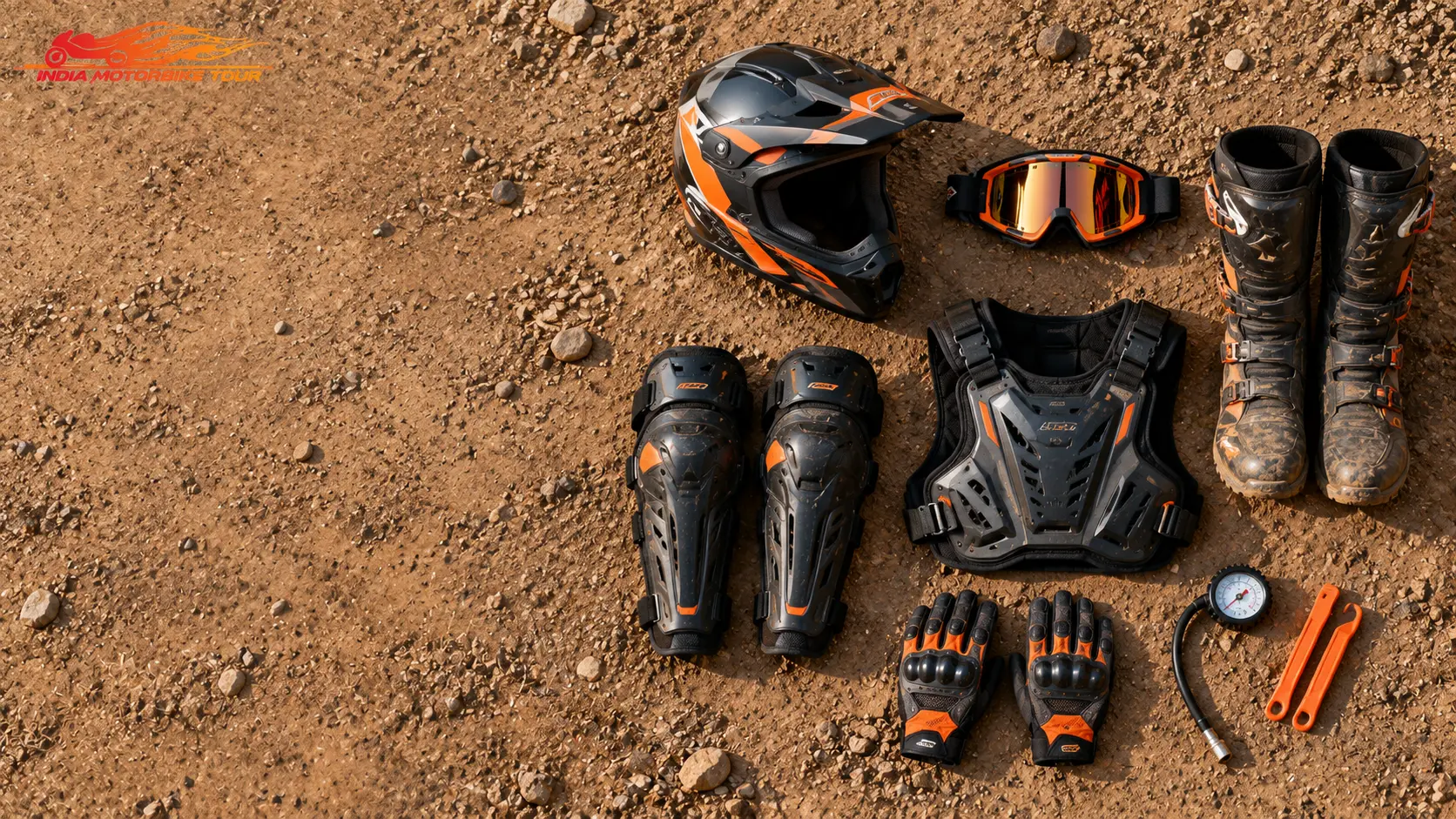
Your motorcycle for the tour is prepared by our team for the route. Tell us your height, riding experience and gear needs when you book, and we will guide you on what to bring.
Why Does Bike Weight and Setup Matter?
On unpaved ground, a lighter and more manageable bike is easier to correct mid-slide and to pick up after a low-speed tip-over. That is one reason the classic Royal Enfield, with its relaxed power delivery and upright riding position, suits India's mixed roads so well. Ground clearance, tyres and tyre pressure are matched to the terrain by our team, so you should not need to adjust them yourself. Please do not let air out of your tyres on the road; speak to your tour captain instead.
What Happens If You Drop the Bike?
- Low-speed drops are common and rarely serious, especially on soft ground. If it happens:
- Turn off the engine.
- Check yourself for injury before anything else.
- Signal to the rider behind and wait for help. Your tour captain and support team will assist.
- When lifting, bend your knees and use your legs, not your back.
- Check levers, footpegs and luggage before riding on.
Dropping the bike a couple of times is part of dirt riding for many first-timers. What matters is staying calm and continuing safely.
When Is the Best Time for Dirt Sections in India?
Ladakh and the high Himalayas: broadly June to September, when the high passes are generally open. Surfaces and water levels change with weather, so always follow your tour captain's guidance on the day.
Rajasthan: October to March, when the heat is manageable.
How Can You Prepare Before You Fly to India?
- Practise riding standing on the pegs in a quiet car park or on a gentle gravel road.
- Build some leg and core fitness; standing for longer stretches is tiring.
- Get used to riding in your full gear.
- Read about altitude and acclimatisation, and plan rest days into your trip.
- Tell us your honest experience level so we can match you to the right itinerary.
Frequently Asked Questions
Do I need off-road experience to join a tour in India?
Not necessarily. Most tours are mainly paved with some rough sections. Comfortable road riding experience is the main requirement, and our team will tell you which itineraries suit your level.
Is it normal to fall off on dirt?
Small drops at low speed are common for first-timers and are usually harmless. Good gear, a steady pace and listening to your tour captain greatly reduce the risk.
Should I ride standing or sitting?
Standing is better on rough, loose or uneven ground. Sitting is better on smooth surfaces and for slow, tight manoeuvres.
What tyre pressure should I run?
Our team sets this for the route and conditions, so you don't need to adjust anything. Pressures that suit dirt are lower than road pressures but too low can damage rims at speed, which is another reason to leave it to the team.
Can I do a tour on a heavier bike?
We will recommend a bike that suits your height, experience and the route. Tell us when you enquire.
Ready to Ride?
If you are planning your first motorcycle tour in India, tell us about your riding experience and the regions you are curious about. We will suggest a Himalayan or Rajasthan itinerary that matches your confidence and sense of adventure. You should practice riding on an easy hardpack before tackling sand, mud, or more technical trails. How much you practice riding is less important than following this order. It is better to have the right gear for your first ride than to take a risk and ride without the proper gear. Goggles and knee guards do no good in the back of your car. Self teaching can be scary, but a structured clinic can give you the basics in a short amount of time that self teaching can't do in months. You can also check our guide on Practical Information for India Motorcycle Tour Planning for more on this topic.